Tuesday, February 6, 2018

India February 2018 - Friday and Shabbat in Delhi

After a relatively good night’s sleep, considering we had just completed a 14 hour flight and were operating under a 10 and a half hour time difference from Toronto, we awoke to a very smoggy Friday morning. We went to the hotel gym to exercise a bit and then headed down to breakfast. 

Normally in a hotel in most places in the world, you can find enough items to eat for breakfast. A variety of Kellogg’s cereals, yogurt that is approved on the kosher list of a local kashrut agency and uncut fresh fruit and vegetables. The offering here in India was quite dismal. While there was corn flakes, we had been told that we could not drink the local milk. And there was no yogurt. And we were staying away from anything that required washing or thin skinned fruits and vegetables.

Thankfully we had come prepared. We brought with UHT long life milk from Canada and a variety of hard cheese and cream cheese. We asked the hotel kitchen for some fruit, and they brought us oranges and bananas. 

Once we leave Delhi, things will improve, as India Kosher Travel has supplied us with a kosher fry pan and we can ask and assist the local hotel chef in preparing eggs and omelettes for us in the various hotels in which we will stay for the duration of the trip. 

At 9 AM, our driver Vikram and a local guide, were waiting for us in the lobby and we were off to explore the sights, sounds and smells of Delhi.

The main religions in India are Hindu (80%) and Muslim (12%). And then there are significant representation of Bhuddists, Jains and Sikhs. There are small numbers of Christians and negligible numbers of Jews. There are temples all over. 

On Friday morning, our guide first took us to see the huge mosque of Jama Masjid, the largest mosque in Delhi. It was built between 1644 and 1656. Our guide told us that he brought us here at this point because as a rule, it was relatively empty this early on a Friday. The two minarets are 40 metres high. The mosque is constructed from red limestone and white marble.
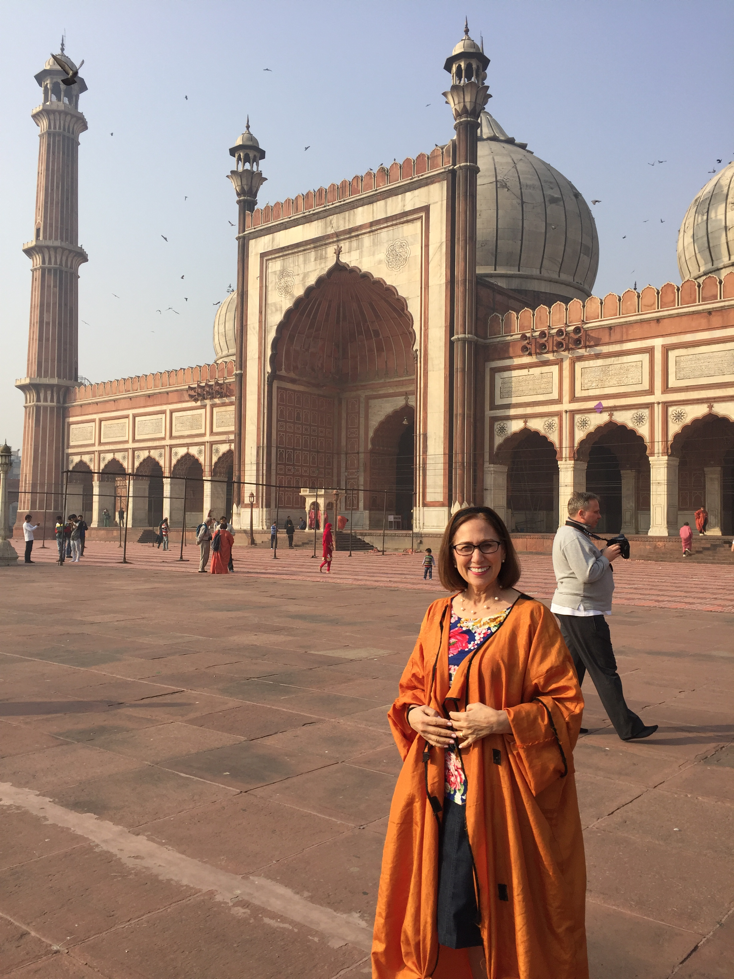

Visitors to the mosque have to remove their shoes and women have to wear a robe, irregardless of how tznius they believe they are dressed. There is no charge, but if you wish to take photos, there is a “camera charge”. 

We entered the large outer courtyard of the mosque that can hold 25000 worshipers at one time. Attendants were busy placing carpets on the floor in preparation for the Friday prayers later that day.

Here is a picture of the mosque filled with 25000 worshipers that I took from the web.

The mosque is located in one of the oldest parts of “old” Delhi. As a means of protecting the city against invaders, this part of town was organized with an intricate maze of narrow streets and lanes, so that in case of attack, the locals could split up and confuse the enemy. Two shots of the local scenery, someone washing himself in the middle of the street and a local colourful fellow.


Today these streets are lined with small shops and stalls selling a variety of goods. Many of the shops were shuttered, because we had arrived during a civil strike with locals protesting against new government regulations that is legislating some basic building codes. The locals feel that this is unfair and that their status should be grandfathered. 

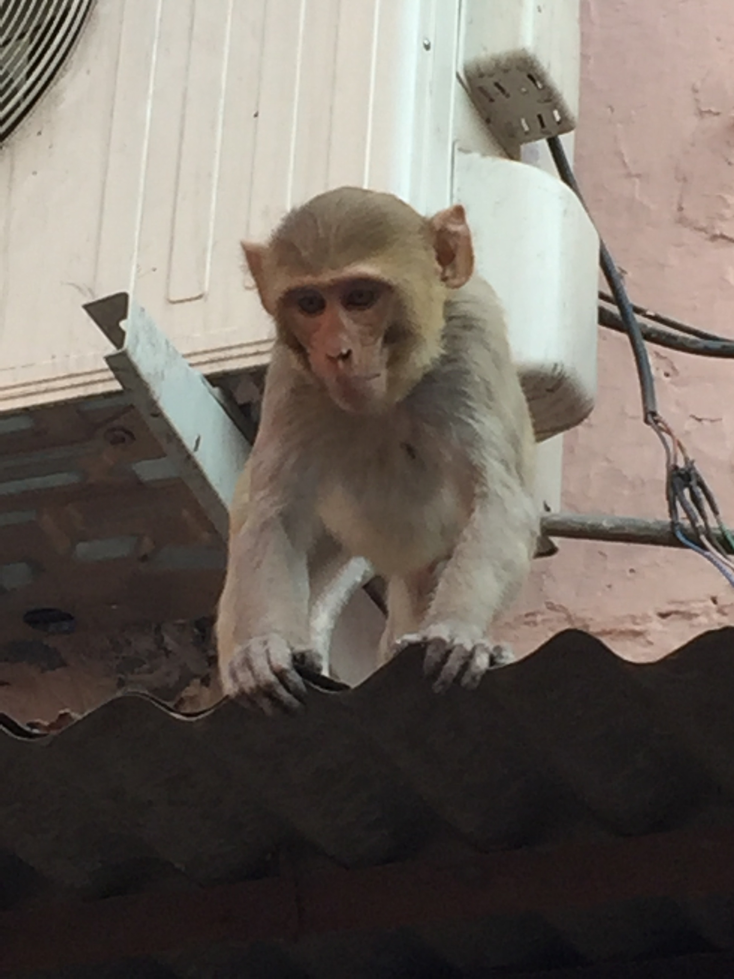
As we walked thru the narrow lanes, we saw wild monkeys who live and maneuver above the stalls, jumping from roof to roof. 
As well, we noticed the reverse swastika symbol proudly displayed above many doorways. As opposed to what we have learned, the swastika is a symbol of peace and it was hijacked and distorted by the Nazis.


The area is very rundown and we will have more to say about the general infrastructure in Delhi and other places we’ve seen thus far in India. Add to the lack of order the narrow streets and numerous tuktuks and hundreds of motorcycles, all blowing their horns and the occasional cow or bull strolling by unattended and you have absolute chaos.


We walked to the spice and flower market and then took a brief rickshaw ride through the area.


We then drove to the memorial in honor of Mahatma Gandhi, the famous freedom fighter who helped bring independence to India from the British in 1947. Because bodies are cremated here with the ashes “offered” to the river, the memorial is not a burial place, just a garden dedicated to his memory. 


We then drove to the tomb of Humayun, who was the Mughal Emperor of India in the 16th century. 
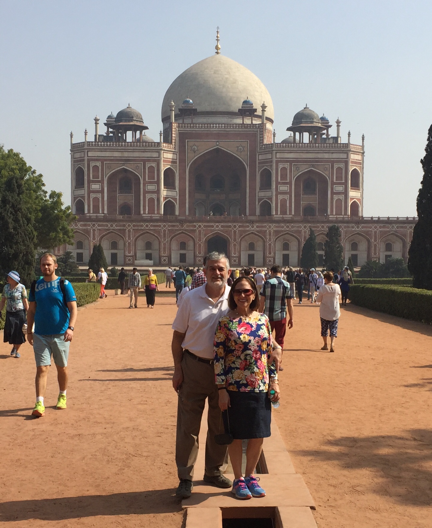

 It is a huge mausoleum and garden built by his first wife Empress Bega Begum between 1562 and 1571 and designed by a Persian architect. It was completed 85 years before the Taj Mahal. By comparing the two structures, you will see how the Mughals refined and perfected their original design to create their ultimate masterpiece: the Taj Mahal. 
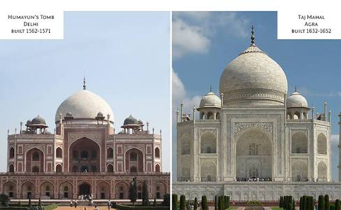

There is no one currently buried there as any tombs were moved long ago. Obviously this is a non Hindu structure because Hindus do not bury their dead. 

One cannot help but notice the Magen Davids that adorn the structure. It was explained to us that these are Muslim symbols and is a symbol used widely in the world of Islam. Muslims know the hexagram as the Seal of Solomon — both Solomon and David were prophets, and both are mentioned in the Quran. The hexagram appears in Islamic artifacts and mosques worldwide.

Because of the beauty of the place it is widely visited by school groups and by brides and grooms for their wedding pictures. 


We drove next to the Judah Haim Synagogue, the only remaining shul in Delhi (other than Chabad) which was completed in 1956. It was originally Orthodox but a number of years ago, as a result of being unable to get a minyan, the community decided to count women to the minyan. There are only 7 or 8 Jewish families remaining in Delhi. 


We were told by our driver that we would be unable to see the inside of the shul, because it is only open for visitors just before Shabbat. But as we were driving by, we met Ezekiel, a local lawyer, who is the volunteer person in charge of the shul.

He showed us around and invited us to come and pray there for Shabbat but we told him that we were staying in walking distance to Chabad and as such we would be davening there. 

On to India Gate, a huge war memorial dedicated to the 70000 Indian soldiers who died in the First World War. 
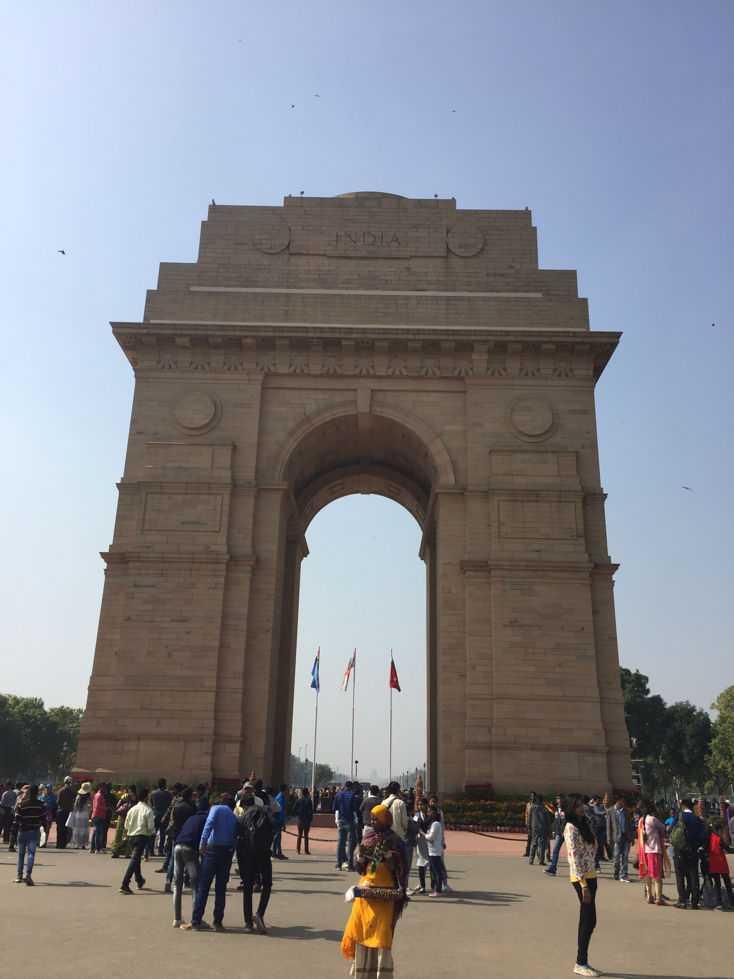

Looking though the memorial, you can see the Capitol Buildings of India and the President’s residence. It reminded me of the open area between the US capitol building and the Lincoln Memorial. 

And so after a long day and needing to prepare for Shabbat, we returned to the hotel.

About half an hour before Shabbat, our driver, Vikram, came to drive us to Chabad. 

Chabad is located on a street called Main Bazaar Street, a narrow bustling rundown street of small shops, stalls and lots of traffic. Across the top of the street is a huge banner proclaiming “Yechi Adonainu etc” with a picture of the Rebbe and an arrow pointing to a very narrow lane to the walk up entrance to Chabad. As we walked down the street, we began to hear calls of Shalom, Shabbat Shalom, ma shelomcha (how are you) and ata miyisrael (are you from Israel)? And then simultaneously, calls of “come see my shop”. Everywhere, there were signs in Hebrew. Clearly there are many Israeli backpackers who come to this area and I guess Chabad is in the right place to reach out to them.


When we climbed to the second floor we met Rabbi Akiva Sudri and his wife Chaya Mushka and their three children. There were also two young student shlichim and two bnot sherut (girls doing their volunteer civil service) who are part of the Chabad Delhi infrastructure. It was just one large room which incorporated the shul and the group eating area and we were soon to see the third floor which was the kitchen and the restaurant which operates throughout the week. 

Rabbi Akiva is originally from Jerusalem and his wife “Mushkie” is from a small community near Kfar Chabad. They have been in Delhi for 7 years and their youngest child was born in Delhi. It appears that they are here to stay. 

Gradually people started arriving, mostly Israeli travelers who were coming for Kabbalat Shabbat and the evening Shabbat meal. Rabbi Akiva greeted everyone warmly with a smile (for everyone) and a hug (for the men). We finally had enough for a minyan for mincha (just 10) and then by the time the maariv service concluded there were about thirty people in the room.

At the meal, which consisted of plentiful and delicious salads and a main course of chicken and rice, we interacted with  a few of the people close to our age, as the vast majority were young Israeli backpackers. Most of the people there were not observant but enjoyed having a warm meal and an even warmer environment where they could hang out with “Family”.

In typical Chabad fashion, various people were asked to speak and I accepted the invitation and shared a few stories of our travels and the warmth of Chabad that we had experienced during our travels. 

On Shabbat morning one of the guides showed up to walk us to Chabad and by now, knowing the route, we suggested that we could make our own way home. 

When we arrived there at 10:15, there was no one there other than Rabbi Akiva and his two young shlichim. Over the next two hours, there were a number of people who arrived and left and absolutely no pressure was put on anyone to stay even if it would help make a minyan. And so finally, we davened without a minyan.

And then at 12:30, when we were ready to sit down to eat, miraculously a minyan appeared and after kiddush we took out the Sefer Torah and read the weekly portion of Yitro and the Ten Commandments. I volunteered to lain and have now added another country to my impending application to Guinness as the person who has read from the Torah in the most countries in the world! :-)

After a good lunch, we made our way back to the hotel and had a pleasant Shabbat nap, made havdalah and prepared our belongings for our flight on Sunday to Udaipur, a city a few hundred kilometres south of Delhi in the state of Rajasthan. Our driver Vikram left on Friday night for the drive to Udaipur and he would be picking us up on our arrival on Sunday at noon. 

That’s it for now....next post will be Udaipur.

All the best

Fran and David


Saturday, February 3, 2018

India Feb 2018 - 2 - Arrival in India

At the airport in Toronto, we had the opportunity of visiting the new Signature Lounge, which is the upgrade from the regular Maple Leaf Lounge. It is a very fancy Lounge, opened just 7 weeks ago and is open only to business class passengers.

We normally fly economy or premium economy if we get an upgrade. But this time, because I had an Air Canada discount coupon that they gave me because of a mixup on a previous flight, and because the flight is about 14 hours, we decided to fly business. 

This exclusive lounge's main feature is the cooked to order restaurant, where business class passengers can enjoy a complimentary three course meal before they depart. As well, there are concierges and waiters galore who will prepare the tea of coffee of your choice, cocktails of many types etc.; In short, you just sit there and they shower you with attention.

Now all of this is great if you do not keep kosher, but for those of us who do, there is really no reason to go to this Lounge. 
We like the Maple Leaf Lounge as it is and while this place was luxurious, we do not see ourselves returning there.

On the way to the lounge, which was a good hour before the posted boarding time, we noticed many people lining up for our flight. We asked the Air Canada people in the lounge whether we should also be boarding, and they told us that this is quite common for the two nightly flights to India. 

It was good we did not line up, because the flight was delayed by about 30 minutes and so we headed down about 9:15 PM. While standing in line we struck up a conversation with a few fellow travelers, who were originally from India and who were returning home to visit family or to attend family celebrations. They were very pleasant and shared a few things with us about India. 

First, people of Indian origin tend to be a little pushy and would not hesitate to butt in front of you in a line, but you should not take this personally. It is part of the culture and one should learn not to sweat it. Because of the number of people in India, you were brought up with the understanding that if you want to get ahead, you have to show aggressiveness and what we would call Chutzpah! Sort of reminds me of our experiences in another place that we visit a few times a year😀.

Second, they were all pleased that we had chosen their country to visit and while they would normally push ahead of us in line, because we were guests, they insisted that we go first in line...This is the way you treat guests to your country or to your home.

Third, one of them was headed to a family wedding which he described as a week long affair....they have the seven day sheva brachot celebration as part of the actual wedding! As he (an Indian born cardiologist from Chicago) put it, people from India sometimes think that "their weddings last longer than many American marriages"!!!!

Fourth, they taught us a word...."chalta hai chalta hai"...which is loosely translated as "carry on...carry on" or don't get stressed...Everything will be OK. It is an Indian mantra which allows one to make it thru many crises in life. Everything will work out in the end....Do not allow life's many challenges to distract you from living life to the fullest!

When I subsequently looked it up on Google, I found the following picture which was captioned “what an architect says when he sees the constructed staircase that he designed ...”Chalta hai”:


The flight was good but very long. Both Fran and I slept well and we arrived in New Delhi just before 10 PM. 

On these long flights I often look at the flight map on the screen and could not help but notice that the "over the North Pole" route that we were taking took us directly across Vilna (Vilnius), Lithuania, not far from where my Mother's family was from and where I would one day wish to visit; and then as we neared New Delhi, we were flying right on top of Kabul and Qandahar, places that are definitely not on our "bucket list" of places to visit.

I had been in touch with Moshe from India Kosher Travel and he supplied me with the name and phone number of the fellow who would be meeting us at the airport, holding an India Kosher Travel sign.

I immediately WhatsApp'ed him from Toronto and sent him a picture of us so he would know who to look for and he returned the favour with his selfie picture. This technology is amazing and makes travel that much easier. 

When we deplaned, we went thru the customs and immigration process which was quite efficient and adorning the wall of the immigration hall were these yoga hand motions:


We then picked up our luggage and exited to the arrivals hall. Standing right in front of us with the India Kosher Travel sign was Mr. Nitesh.


We had this vision from what we had read, of an arrivals hall that was teeming with people, each jostling for a bit of space and of being accosted by many "touts" who were there to give you a ride, change money, etc. Surprisingly, it was rather the opposite. Everyone who was waiting stood in a row with their identifying signs, and then we noticed that the airport was quite empty and very modern. It, the new terminal, was built in 2010, and was immaculately clean. 

Mr. Nitesh walked us to the parking area, and then told us that our driver, Vikram, would soon be there with our car. He explained that Vikram would be our driver for the entire three week period that we would be visiting. He also told us that they were there at our disposal for whatever we needed. On Friday afternoon before Shabbat, they would drive us to Chabad and then after the meal would actually walk us back to our hotel. On Shabbat morning, they would again be at the hotel to walk us to and from Chabad.  The hotel had already been informed that we would need assistance in terms of key entry etc. At this point, it certainly appears that every detail is being attended to. 

He walked us to the parking area, and the first thing that we noticed was the incessant beeping of horns. For an airport with few people in the terminal, the access roads to and from the airport were packed with cars and everyone was on their horns. 

The cacophony of loud honking of horns was so widespread throughout our first couple of days....you cannot escape it. It can give you a major headache...one of our guides said jokingly that when buying a car, it matters not to the purchaser whether the car has brakes, but he will definitely check to see that it has a loud and working horn.

We had a 30 minute drive to our hotel, the Metropolitan, near Connaught Place, one of the largest financial and commercial Centres of New Delhi. On the way, we passed by embassy row, a long street with embassy after embassy on large estates with obviously a lot of security surrounding each building.

When we arrived in the hotel, we were really surprised by the security to get into the hotel. The car approached a gate, where the hood and trunk of the car were opened to ensure that we were not carrying anything threatening. Then we were told that before our luggage would be allowed to enter the building, the hotel security staff would put our luggage thru a scanner as is done in every airport in the world. 

These measures had been enacted after the terrible attacks at the Taj Hotel and the Chabad House in Mumbai in November 2008, when Chabad Shlichim Rabbi and Mrs. Holzberg were murdered. From that point on, Indian authorities take no chances and wish to ensure that visitors are safe. 

We will see if these measures are taken in the other cities that we visit along the way. 

The hotel is clean and rated highly, the room is pleasant and so, after a long journey here, we unpacked and slept for most of the night. 

Next post will be our full day tour on Friday of Delhi and Shabbat at Chabad of Delhi.

All the best

Fran and David


Sunday, January 28, 2018

On our way to India - India 1 - February 1, 2018


We are very excited about our latest adventure, our first visit to India.


We never really had India on our "bucket list" but then we had occasion to speak to a number of friends (including Abe and Eva Kaplan) who raved about the experience, the colours, the culture and the exotic environment that makes up India. And so, what was not in the list jumped to the top of the list and our adventure is about to begin.


At the same time, many people to whom we spoke, shared with us the negatives of the India Experience, the poverty, the lack of a standard of cleanliness, the fear of disease, the great distances within India that one would have to travel, the overwhelming numbers of people, and the number of scams that locals attempt on tourists. 


But because we have a desire to explore the wonders of God's creations, and to interact with people of varying cultures, we nevertheless decided to go and we will be happy to share our own personal perspective with all of you based on actual experiences over the next three weeks.


As with all of our travels, the first posting on this blog is a collection of facts and figures presented below. Over the next few weeks, while we are sharing the actual day to day experiences, we will also share with you our observations on Indian life and interesting tidbits that we pick up along the way.


The Republic of India, the seventh largest country in the world by total area, has the second largest population in the world, with over 1.2 billion people, and the most populous democracy. 


India belongs to the continent of Asia, it is bordered by the countries of Bangladesh, Bhutan, Burma or Myanmaar, China, Tibet, Nepal, and Pakistan. Its highest mountain is Kanchenjunga, the third highest mountain in the world at 8,598m (28,209 ft), which it shares with Nepal.


Many different languages are spoken in India. The main ones are Hindi, Bengali, Telugu, Marathi, Tamil, and Urdu. 


Only 75% of males and just over 50% of females are literate


The capital city is New Delhi, while the most populated city is Mumbai. Other major cities include Kolkata, Chennai and Bangalore. New Delhi has over 25 million people, which has doubled in the past 25 years. 


Because of India's location, it experiences periods of heavy rain called Monsoons. However, the time of year that we have decided to visit and the specific region where we are visiting, is supposed to have average temperatures between 20 and 26C., with nighttime temps in the 8 - 11C range with abundant sunshine. We will let you know how good they are at forecasting. 


India became an independent nation in 1947 after ending British rule that began in 1858. 

Mahatma Gandhi is famous for the important part he played in gaining India's independence. Once British rule was over, India was split into the Republic of India and the Islamic Republic of Pakistan.


The national symbol of India is the endangered Bengal Tiger and the most popular sport is cricket.


The most popular tourist attraction is the Taj Mahal, located in the province of Rajahstan (where we will be spending the bulk of our time in India), and in the city of Agra. 


Four major world religions, Hinduism, Buddhism, Jainism and Sikhism originated in India, while Zoroastrianism, Judaism, Christianity and Islam arrived in the first millennium CE and shaped the region's diverse culture. Hindus represent over 80% of the population and Muslims represent 12%. There is less than one percent with no religion and Jews make up a small fraction of one thousandth of one percent. 


There are about 5000 Jews remaining in India, many having made aliyah to Israel. 3500 live in Mumbai and the rest are scattered in smaller Jewish communities like New Delhi, Colcotta, and Cochin.


There are Chabad Houses and Centres located in all corners of India, mainly to provide service to backpacking Israelis who have made India a significant Jewish destination (there is even a hiking route in India that has been renamed "The Hummous Trail" because of the numbers of Israeli backpackers) and to service the many Jewish tour groups who visit from all corners of the world. 


On our trip, we will be in India for three Shabbatot and will visit the Chabad Centres in New Delhi, Pushkar and Rishikesh. Chabad will also be providing food and meals for us during the course of our travels. As we have said many times before, without Chabad, it would be very difficult for the kosher traveler to see the world. 


Our visit to India will begin in New Delhi where we will land on Thursday evening after a nearly 14 hour direct flight on Air Canada. As we wrote above, we will be spending the bulk of our time in the province of Rajahstan, India's largest province. 


Rajahstan is Hindi for The Land Of Kings. A major portion of the state is covered with Thar Desert, also known as The Great Indian Desert. Rajahstan, with a population of close to 70 million people, is a land of wonderful palaces, forts, colours and festivals.


Jaipur, the largest city of the state, is its Capital City. Jaipur is also known as the “Pink City”. Other cities known by a specific colour are blue Jodhpur, golden Jaisalamer and white Udaipur. We are not really sure at this point of the significance of the colours, but once we visit, we should be able to explain this in greater detail. 


During our visit which is primarily in the Northwest of India, we will be visiting New Delhi, Udaipur, Jaipur, Jodhpur, Nimaj, Agra, Varanasi, Pushkar, Rishikesh, and Amritsar. We can honestly say that other than New Delhi we had never heard of any of these places. We did know about the Taj Mahal but did not know that it was in Agra or where Agra was located in relation to the other places we are visiting. 


Most of our independent travel itinerary is being handled by India Kosher Travel, a Chabad related travel company that specialises in Jewish group tours of India. We will have about 7 internal flights within India over the next three weeks and will be doing a lot of driving as well, or if I must clarify, we will be driven over many hours and kilometres by drivers and guides supplied by India Kosher Travel. We are taking very little food with us as India Kosher Travel will be supplying the bulk of our meals, delivered directly to the hotels along our route. 


We have taken the necessary vaccines against all sorts of illnesses that one could pick up on such a trip and will definitely be heeding the advice contained in every guidebook against drinking anything but pure bottled water. 


Thanks for traveling with us and we will hopefully be posting every day or two as we visit India.


All the best


Fran and David


 .


Monday, September 4, 2017

Third Great Grandchildren Trip - Austria and Switzerland - on to Switzerland

On Sunday morning, we left Davos and headed west to Lucerne. Our ultimate destination that day would be the small town in the Alps of Hasliberg, between Lucerne and Interlaken. We had rented a three bedroom ski lodge for three nights on Airbnb. 

Many people have asked us about our success with Airbnb. After all, when you rent a hotel room, there are generally government regulated rating systems which designate hotels as three, four or five star and that way you can be reassured that your personal standards will be met. As well, with hotels, there are chains (Hilton, Marriott, etc) that give you an avenue for complaints or praise that generally carry some weight. 

The argument against Airbnb, is that you are renting from an individual and in essence are renting blind. And since you generally pay in advance, you have no avenue for recompense if the advertised standards are not delivered. And in many cases with Airbnb, you never actually meet your provider, he or she is invisible. You choose from a website and pay online. In many cases, you pick up the keys from a lockbox and read a set of instructions or a guidebook that is provided online or provided in printed form when you enter the rental unit.

So what have been our experiences and how can we be assured that what we want will be delivered?

We can tell you that we have been using Airbnb and similar providers like VRBO (Vacation Rental By Owner) for a number of years and generally have been very pleased with our experiences. But like in any business transaction, you have to do your own research to minimize any issues.

First, the widespread availability of Trip Advisor in every area of travel has made the research easier. There are reports on trip advisor for almost every apartment or vacation home that you might consider. We read those reports and if there is a general rating of 4 or 5 stars consistent in a large number of Trip Advisor reports, you can rest assured that the place is OK. 

As well, Airbnb uses social media to protect both the landlord and the renter. The renter is urged to review his experience within a couple of days after the rental is complete; as well the landlord is urged to review the renter. This way both are protected. Because before you rent, you can read what everyone else has written about their actual experiences in that specific accommodation. Did the place actually have high speed wifi? Was the place really quiet and clean? Was the view the actual view that you will see when you arrive? Did the landlord respond quickly to emails? As well, the landlord can read everything that other landlords have said about you when you rented their places. Were you clean, did you trash the place etc.? 

With the use Street View on Google Maps, you can actually look at the facility and the location. You can map just how far it is from necessary facilities like supermarkets, public transportation and in our case, the availability of local synagogues. 

Our actual experiences in renting private apartments on Airbnb and other sites has been excellent and we use the service extensively in our travels. Because of our kosher food needs, the availability of apartments with kitchens is almost a necessity when we are travelling to locales with little kosher infrastructure. And therefore when we are looking at the apartment's facilities, we will look for a fridge, a cooktop, a microwave etc. And while some people are OK with renting a shared space, we only look for totally private apartments. 

If you look carefully enough, you can find very reasonably costing apartments on Airbnb; examples are the two that we rented on this trip. Both were under $150 a night which is very reasonable for five people who in a hotel situation would pay much more with much less room.

The place we rented in Hasliberg from a local called Max was a beautifully situated totally private (ie; we had the whole building) ski lodge. While the place we had in Austria was an apartment in a multi unit facility and was beautiful, Max's place was a three storey house, with the basement being the laundry and utility rooms; the main floor having a living room, dining room, outdoor patio and kitchen; and three bedrooms and a bathroom on the upper floor. All the windows in the unit faced Alp peaks and the valley below. Our unit was about halfway up a large mountain which we reached by driving a number of kilometres up switchbacks and hairpin turns. 

In this particular case, Max, an elderly Swiss man and his daughter, greeted us at the apartment and explained how everything worked. The unit was probably the best equipped Airbnb that we had ever stayed in. Everything that you might ever need was available for your use in Max's place. He even provided coffee beans so you could make freshly ground and brewed coffee in his Saeco Coffee maker; umbrellas, a pepper mill, and every possible kitchen utensil (most of which we could not use because of kashrut concerns). 

We really enjoyed this Airbnb and the granddaughters could not get over the view to which they awoke every morning. Utterly awesome and magnificent. When we got there we davened mincha together and really understood the meaning of the prayer "ma rabu maasecha Hashem" - "how wonderful are Your creations, Hashem"


After a very busy week in Austria, we had decided that our Switzerland experience would consist of more relaxing days. And because it was overcast and threatening, we took our time leaving Davos on Sunday morning and arrived in Lucerne in the early afternoon. We parked our car in the Lucerne Train Station or Banhof which is located right next to the port for all the tourist boats and opposite the famous Kapellbrucke (or Chapel Bridge), which is a covered wooden footbridge, the oldest wooden covered bridge in Europe and the world's oldest surviving truss bridge. It is the city's widely photographed symbol and one of Switzerland's main tourist attractions. 

The bridge was originally built in 1365 as part of Lucerne's fortifications and was partially destroyed by fire in 1993. It was reconstructed and reopened to the public a year later and continues to be a widely visited and photographed attraction. 

The best time to view the bridge and the surrounding area is on a sunny day but since we were driving right through Lucerne on our way to our Airbnb in Hasliberg, we decided to tour it in the rain. The kids loved Lucerne and also enjoyed walking through the pedestrian streets in the old city just beyond the bridge. Unfortunately, because we were visiting on a Sunday, everything was closed. And so we decided that we would try to return sometime during the next few days that we were in the area. 

Here is Lucerne on an overcast day and a similar view a few days later in the sunshine.


In the late afternoon we headed out to our Airbnb which we have described earlier, unpacked, had another enjoyable meal together sitting on the patio overlooking the Alps and planned the activities for Monday, Tuesday and Wednesday. 

Before we had left Toronto, we had a conversation with Jack Martell, who had previously visited the area and he told us that one "do not miss" attraction in the area is the Trummelbach Wasserfalls. As well, our host Max told us that we should make an extra effort to visit the Aareschlucht Gorge which is quite close to Hasliberg.

So, on Monday we planned to begin the day with a drive to Aareschlucht and then to drive on to Trummelbach and finally, time permitting, to visit the town of Interlaken, the centre of tourism in the area. 

On Tuesday, our itinerary would be a boat ride on the Brienze Sea and then a return in the afternoon to Luzerne, which we would hopefully be able to visit this time in the sunshine with stores open for business.

And then on Wednesday, our last full day of the trip, we would pack up Max's place, drive up to the area near the Zurich Airport to drop off our luggage at the Zurich Airport Hilton (where we would spend our last night in close proximity to the airport where we would all be catching 9:30 AM flights on Thursday) and then drive up to the quaint town of Schaffhausen for some surprises that we had planned for the granddaughters. 

Here is a summary of each place that we visited as well as the Wednesday surprises.

Aareschlucht Gorge - a "schlucht" in German is a gorge and since this Gorge occurs in the Aares River, it is called Aareschlucht. It is near the town of Meiringen and is one mile long, with sheer cliffs of up to 50 metres high on either side. At its widest point it is 30 metres wide and at its narrowest point it is just one metre wide. Permission to build walking paths was granted in 1887 and two years later it was opened to the public as a tourist attraction. 


In contrast to the gorges that we visited in Austria, this one is much flatter and straighter with stairs to climb only at the end of the walk. 


It takes about 40 minutes to walk the full length of the gorge and it was quite a refreshing and pleasant walk. Before we set out on the walk, I asked the lady at the ticket counter whether there were any options for the return trip, as the total with picture taking and resting could stretch to two hours, and she replied that there was a train station at the end and for 4 francs each, we could ride the one stop return on the train which would deposit us back at the parking lot near the entrance. 

And that is what we did....it is a very dramatic gorge and we enjoyed this attraction quite a bit. One should ask at the end for directions to the train station for the return as it is somewhat hidden and the path that you take leads you over a pedestrian bridge which crosses the river and takes you to a closed door, which only opens once the train has arrived and you walk thru the door directly onto the train. Quite unique. 

Trummelbach Falls - we drove from Aareschlucht to Trummelbach which is on the outskirts of the town of Lauterbrunnen. The name Lauterbrunnen means "clear spring" and it is located in one of the deepest valleys in the Alps, when compared with the height of the surrounding mountains. Some of the mountains that surround Lauterbrunnen are the famous Eiger and Jungfrau peaks. 


We stopped in the valley before getting to Trummelbach because of the numerous very high waterfalls descending from the mountain walls surrounding the town. Quite a sight...quite a Kodak moment!

We drove on a short distance to the Trummelbach Falls. These Falls are unique because they are mostly contained within a cave on the side of the mountain.


You enter at the end of a walkway from the parking lot and then take a Funicular up into the mountain. When you exit, there are quite a few steps built into a tunnel/cave that take you almost to the top of the waterfall. And then you can walk back down to the funicular or walk completely to the bottom which is much more scenic as it allows you to see and experience the force of the waterfalls as they make their way down to the river at the bottom of the mountain. This is a very dramatic waterfall in a very dramatic setting. Definitely worth the drive.


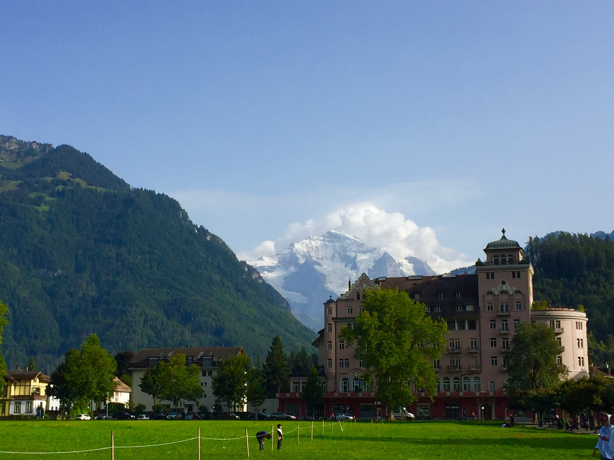
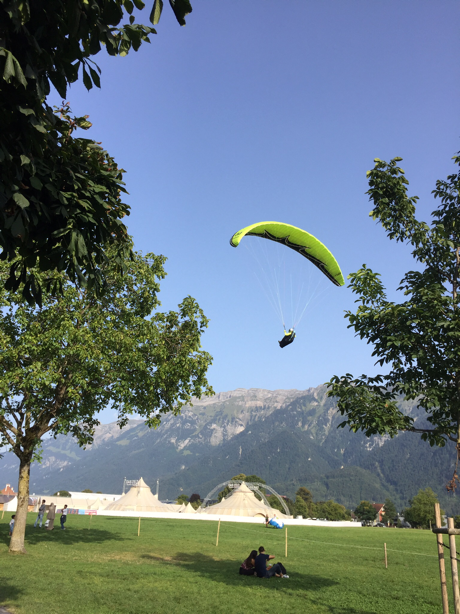
We continued on to Interlaken which we found to be very busy and very touristy. Interlaken's name is derived from its location; it is located in between the two major lakes in the area, Lake Brienze and Lake Thun. Two of our granddaughters wanted to go bike riding and they rented bikes for an hour to explore the town while we and our third granddaughter strolled through town and watched parasailers make their way from the top of one of the surrounding mountains to land right in front of where we were sitting in the local park.


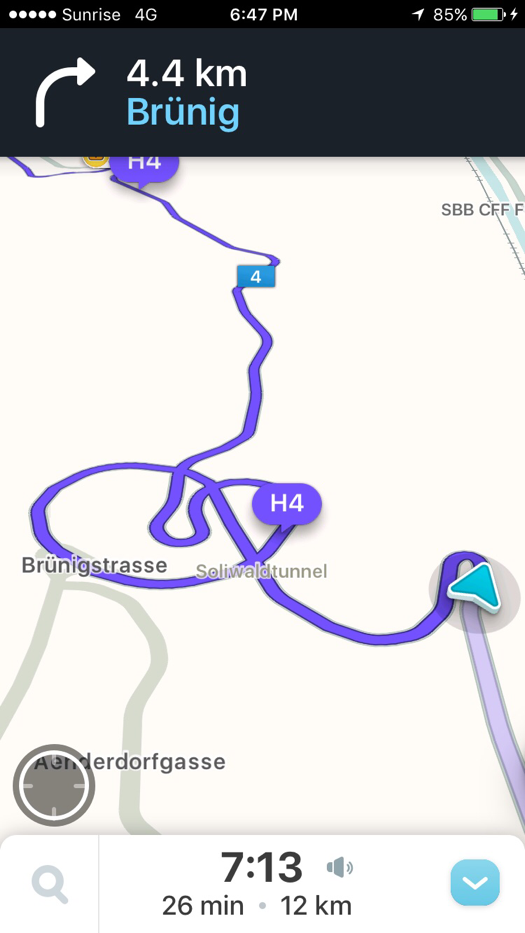
We returned to our house in Hasliberg on the very curvy and switchback filled road....definitely have to pay attention to your driving up here....especially with no guardrail in many places. Here is a screen shot of Waze showing our highway going into a tunnel at the bottom of the mountain and exiting near the top....on the way to our apartment. 


For dinner we bought a one time use BBQ and had a delicious dinner of hotdogs, sausages and cold cuts with potatoes made three ways and a couple of salads on the side. 

Tuesday was a somewhat relaxing day. We drove to the little fishing village of Iseltwald on Lake Brienze and rented a motor boat for cruising on the clear calm lake. Each of the granddaughters had turns playing captain of our vessel and with the scenery and the clear sunny weather enjoyed our refreshing hourlong boating experience. 


We then drove back to Lucerne and spent the rest of the afternoon re-experiencing this quaint town in sunlight and warmth. We did some shopping and some picture taking and enjoyed the relaxing non programmed afternoon of in town sightseeing and souvenir shopping. 


We returned to the apartment and spent some time packing up for our final full day in Switzerland. 

On Wednesday, we had a couple of surprises planned for the girls. 

First we packed up and closed the Airbnb apartment and began the drive north to the area near the Zurich airport to the Airport Hilton where we would spend our last night. We checked in and then returned to our vehicle for the drive north to Schaffhausen. 

Just south of the town is the famous Rhinefalls, the largest waterfalls in Europe. Not Niagara Falls by any stretch of the imagination but nevertheless powerful and dramatic. 


The area of the Falls is quite wide and quite close to the walkway that has been constructed for the throngs of tourists that visit annually. One of the main features is the ability to take a number of scenic boat rides up to the actual Falls and the one that we chose allowed us to actually dock at one of the islands in the eye of the Falls and climb to the top which affords you a very upclose front row seat to view and experience the force of the Falls. 


By the time we finished the boat ride, the girls were tired and the weather had turned very warm. But we had a final surprise for the day and the trip. 

A number of years ago, when we visited Schaffhausen, a well preserved mediaeval city, with buildings that are close to 1000 years old, we met Ladd and Caroline who own and run the Cafe Vordergasse in Schaffhausen. It is a vegetarian restaurant with all of the ingredients used being kosher and under supervision. Normally, we would not eat in a vegetarian restaurant because of various other kashrut issues. But in this case, despite the fact that there are very few Jews in Schaffhausen, Ladd and Caroline happen to be Shomer Shabbat observant Jews and they are the owners and chefs in this beautiful cafe in the heart of the old picturesque renaissance town that dates back some 1000 years. 

We had been back a second time a couple of years ago and have developed a relationship with this wonderful friendly couple and as a surprise to the girls, we had contacted Ladd and Caroline and told them that we would be bringing our group to their cafe for our "last supper" of our trip. We also asked Caroline if she would make a special cake as all three girls had recently celebrated birthdays. 

And we kept the surprise going until we were almost in front of the restaurant. All the while, the girls, tired and hot and having a bit of difficulty keeping up with their much older Bubbie and Gramps, were asking whether we should instead head back to the hotel and turn in early before our flights home the next morning. 

But then they noticed us making eye contact with Ladd and noticed his kippah which he wears proudly in the totally non Jewish environment of Schaffhausen and the surprise was over. Not having eaten in a restaurant on the entire trip, they were now very happy to sit down at the beautiful and rather full patio in front of the restaurant at the table that had been reserved specially for us. 


They all ordered meals and freshly squeezed juice cocktails and were just overwhelmed by the meal itself, the beautiful setting and by the warm friendship of Ladd and Caroline. And then when Caroline brought out the specially baked Lava Cake with three candles for the three girls, and everyone began singing happy birthday to them, their smiles and happiness made it clear that this was a very good way for us to end our two week trip to Austria and Switzerland. 

We returned to the hotel and were up early for our shuttle to the airport and we each caught our respective flights back to Toronto and Tel Aviv.


This was a very enjoyable two weeks of bonding with three granddaughters, and we are grateful that we had the chance to do another great Grandparent trip. We look forward to the next one.


All the best

Fran and David