Sunday, September 1, 2019

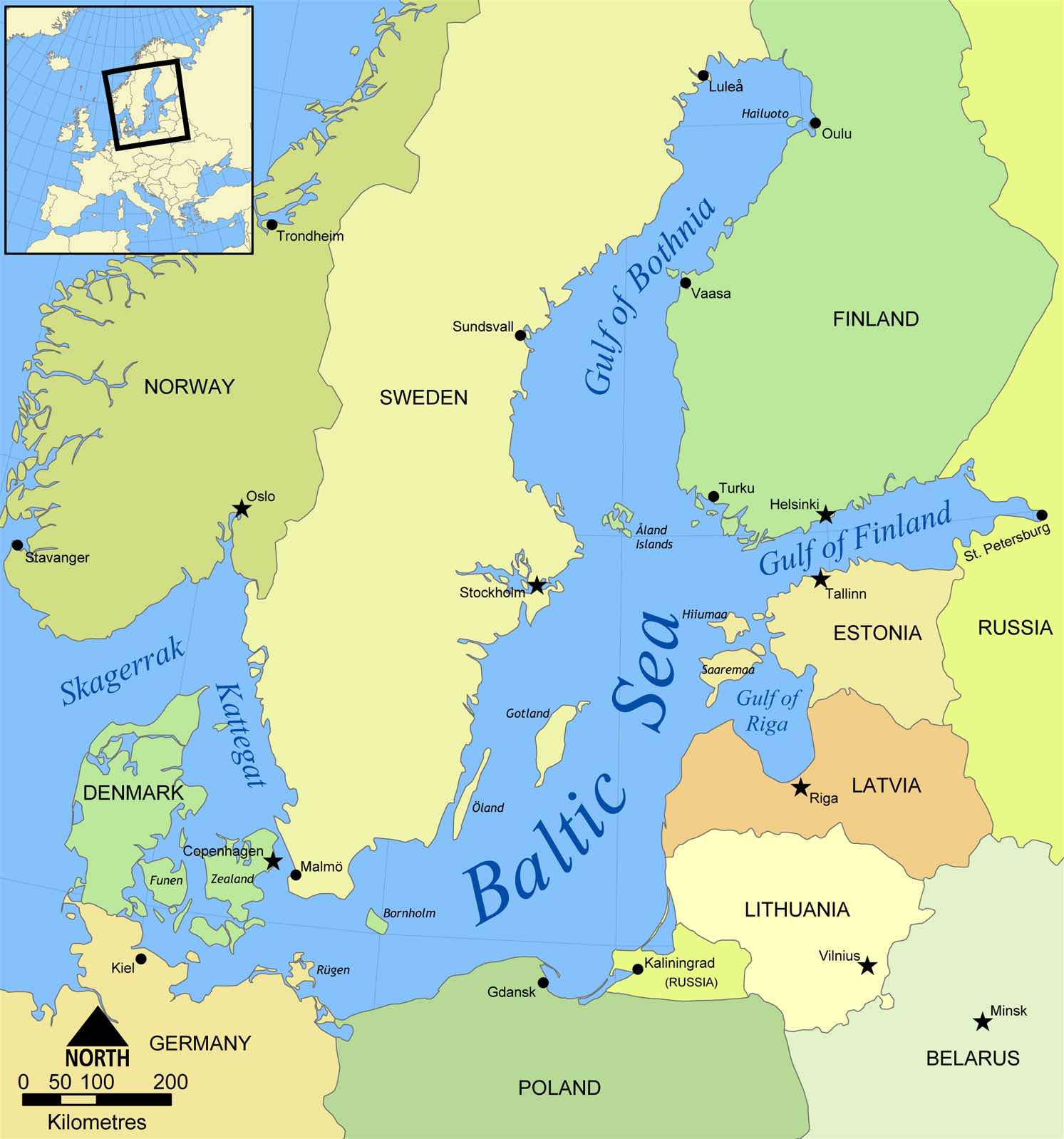
Scandinavia and the Baltics - Post 3

On Wednesday morning, we were up bright and early and Irving and I went to shul. There was a scheduled minyan for 7:30 AM.

When we arrived at the Bajit centre, we were buzzed in and could not find the shul. After a few minutes, another minyan goer arrived and he led us up to the third floor in an older part of the complex. Apparently, there was an original school (name of the school is Hillel) in the older building where we davened, and while it is still being used as a school, the school population grew (currently around 350 kids) and they built an adjacent modern building attached through interior ramps. 

When we got into the shul, it was really an empty meeting room with an Aron Hakodesh. 
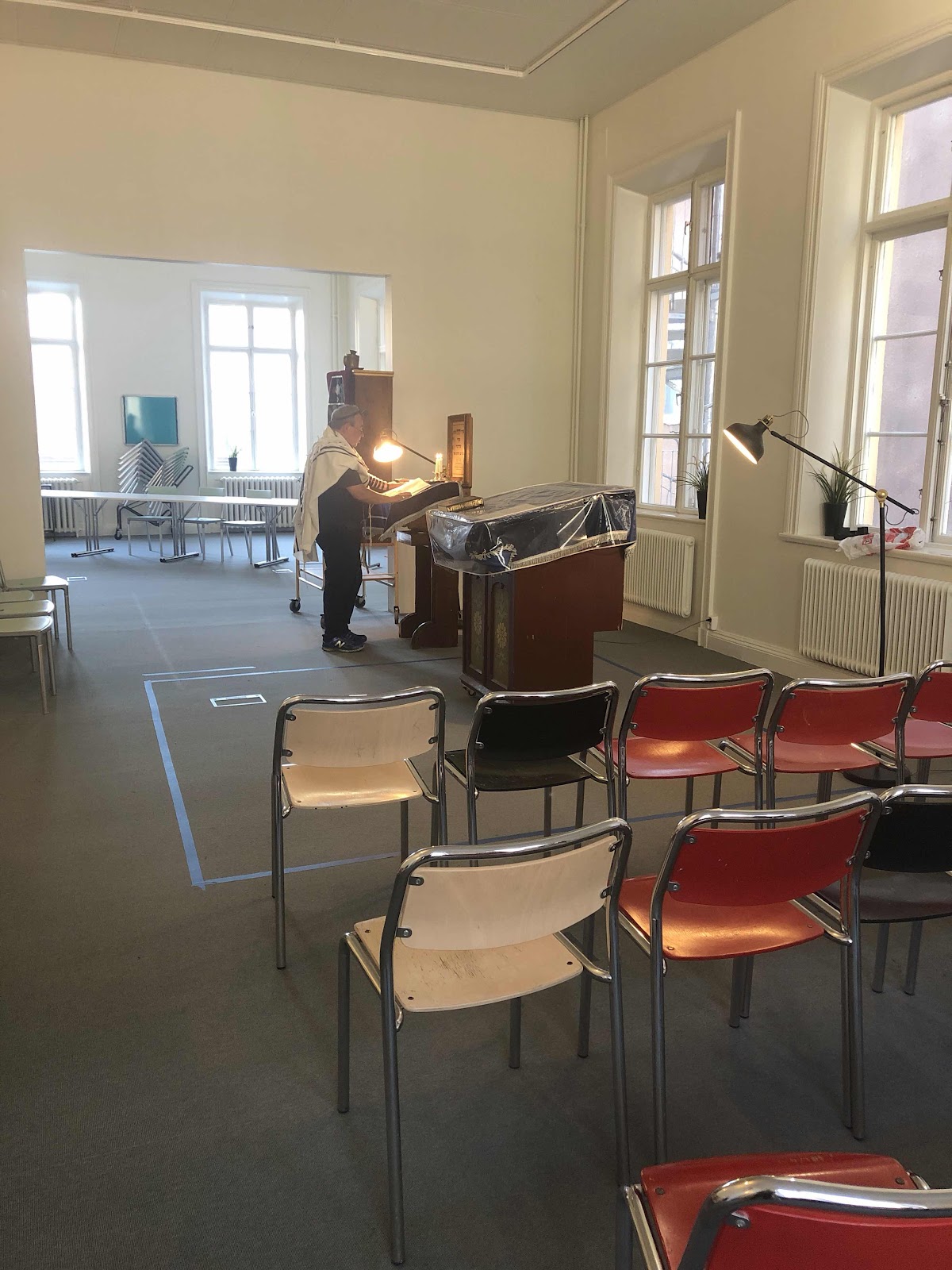

There were 5 men in total including us and then over the next 20 minutes, two more arrived. One of the men explained to us that the room was used for weekday tefillah, and on Shabbat they daven in a larger room on the main floor. There is another shul in town, Adat Yisrael, and they also have a daily minyan. During the summer months, the two minyanim combine because of people being away for the summer school break. The break is over and therefore there are now two minyanim. Adat Yisrael has an easier time with a minyan and Adat Jeschurun struggles. 

We never did get a minyan. The men there invited us to the free breakfast that is served for the minyan goers, but we wanted to get on with our day, so we said our goodbyes and told them we would see them again on Thursday, when they said there was a better chance at a minyan appearing. 

On our way out, we met a man who struck up a conversation with us. He told us that he was on the board of the shul and he explained a number of things to us. The shul had originally been in the older community centre/school which was right next door. The community decided to build the new centre building and sell the other building, which, on a main shopping street in a very expensive area of Stockholm, likely provided much needed funds for the new building. 

The shul itself has a fascinating history, which I will share in a future post.

We walked to a branch of the Fabrique Bakery, just down the street from the shul.


The Rabbi endorses this bakery. They have an amazing array of artisan breads and sweet rolls. We bought enough for the day and headed back to the apartment. 

Our first stop of the day was a free walking tour of Gamla Stan, the old city. We took a cab to the meeting point at the Gamla Stan Subway stop. Taxis in Stockholm are plentiful but are very expensive. 

At the meeting site, there were about twenty other tourists who were taking the Free Tour. 


The guide, Alex, was very knowledgeable about the city and presented the material with a bit of humour. On the two hour walk, he led us thru the Old Town and pointed out all the important buildings in the area, all the while educating us about the history of Sweden and specifically Stockholm. It was a beautiful day, perfect for a walk in the city. 


Our impression of the Swedish people has always been a non violent, pacifist, and compromising people. But the walk certainly changed that story, as we heard about the many wars and the bloody history of the monarchy in years gone by.


Gamla Stan is visually beautiful as the old city and all its buildings have been preserved in their original state. The cobblestone streets and narrow alleyways with low rise buildings takes you back hundreds of years to Stockholm’s roots. It is an island, one of the many that make up the municipality and does not stretch for more than ten blocks in any direction. 

We ended the walk at the Royal Palace, one of the largest in the world with 600 rooms. 


Today, no one lives there. The King and Queen decided a while ago to relocate as they wanted their young children to grow up with accessibility to the outdoors, something that would be impossible in Stockholm. 

Every day at precisely 12:14 PM throngs of spectators gather near the palace to witness the changing of the guard. The procession of army, mounted police, and marching band begins at noon from a location north of the palace and at exactly 12:14 they arrive at the palace for the changing off guard. The band generally plays the Swedish National Anthem, but on the king’s birthday they play a melody by ABBA, as the king is a big fan.

We ate lunch at the harbour next to the Royal Palace. Stockholm seems to be a place where residents and visitors love the outdoors. What is not to love? A clean city surrounded by water from all sides is welcoming to those who want to experience the outdoors. Wherever we went over our 5 days in Stockholm, the outdoor cafes were filled with people. I guess this works well in the summer when the weather is good. I wonder what it looks like in the cold of winter?

We walked thru the narrow shopping streets of Gamla Stan on our way to Ericcson Globe. 


Ericcson was the company that revolutionized the mobile phone. We hopped onto the Subway toward the southern island of Stockholm, and exited at the stop for the Ericcson Globe. Just minutes from the subway stop, we entered an area with the Ericcson Galeria, and three state of the art sports arenas which host hockey games, live theatre and musical performances. The most imposing of these is the Globe, the largest spherical building in the world. The building houses 14000 people for a hockey game. 


On the outside of the globe, there is a gondola ride that transports visitors to the top of the globe where you have an unobstructed view of the entire area. The view was amazing.

From here we hopped back on the subway and went to visit Fotografiska, a very popular photo gallery right next to where the daily cruise ships dock for their Baltic cruises. They were featuring the photography of the famous documentary photographer George Santayana, who covered disasters all over the world and who famously coined the phrase “those who cannot remember the past are condemned to repeat it”. His graphic depictions of 9-11, famines in Africa, suffering of immigrants the world over, etc. were very moving. One of his most famous was this shot of Nelson Mandela.


The second part of the gallery featured a variety of portrait photos and creative whimsical photos by various artists. 

In the back of the main gallery was an area where someone was giving a tour in Swedish. The exhibit was called Fading Stories and the person doing the tour was the photographer herself, Sanna Sjosward. Sanna was born in Iran but was adopted by a Swedish family and raised in Sweden. 

The exhibit, representing 3 years work by Sanna in interviewing and photographing 23 Holocaust survivors, was a joint project of Sanna, the Raoul Wallenberg Foundation and Fotografiska, and will be made available to schools throughout Sweden as a means to emphasizing that we must never forget what happened. As Sanna wrote, “The survivors won’t live forever, but their stories need to”. 

When we heard what the topic was about, we went over to Sanna and introduced ourselves and shared Fran’s roots with her. She was so pleased to spend some time with us and asked that I photograph Fran together with her and with one of her subjects. 


She said “By remembering the stories of the Holocaust we can prevent one of humanity’s darkest moments from repeating itself”. She told us that the exhibit was opened the night before with over 500 guests in honour of the Swedish national day for equal rights, and civil courage, recognizing the amazing contribution of Raoul Wallenberg of blessed memory. 

As we were exiting the gallery, she presented Fran with a memento: an photo album of the Gallery’s last 8 years of featured exhibits. 

We ended a very busy day with a wonderful vegetarian dinner at Herman’s, a restaurant endorsed by the local Orthodox Rabbi. The food was natural, fresh and delicious. Highly recommended.


On Thursday we continue our tour of Stockholm....

All the best, 

Fran and David

Wednesday, August 28, 2019

(Temporary Backup) Scandinavia and the Baltics - Part 2 - Stockholm


Our flight left about 30 minutes late headed across the Atlantic for Copenhagen, Denmark. 

We had a two hour layover in Copenhagen and hung out in the SAS lounge before boarding an SAS Scandinavian Airline flight for the short one hour flight to Stockholm. 

On arrival a little after noon on Tuesday, we collected our luggage and took a taxi to the Östermalm section of Stockholm, just north of the Gamla Stan or Old Town. We checked in to our efficiency apartment on Gravgatan street, about a ten minute walk from the shul and community centre, and also about a block and a half from the main harbour of Stockholm. The location, being centrally located, could not have been more perfect.

When we arrived at the apartment building, the Alters were already there. We unpacked and decided that this would be an early night. So all we did was walk to the JCC and have a very early dinner and then take a short walk through the centre of town.

Our initial impressions of the city is that it is very quiet and very clean. The buildings are very old but lovingly preserved. It seems that whichever way you walk, the road leads to water.

The people seem very friendly and it seems that everyone is in very good physical shape; lots of people using bycicles with many dedicated lanes and paths throughout the city; and everyone is tall and seems to have blonde hair and very long legs.

Irving and Ruchama had spent the time that they had prior to our arrival by visiting the ABBA museum, eating at the kosher street food falafel truck, and visiting the kosher cafe at the Bajit, which is the Swedish name for their JCC. 

We walked to the Bajit, the JCC. My preconceived notion was not what I found. It was a large modern  building with little Jewish markings other than a very non obtrusive Magen David on the outside, accessible only through a laneway with many security video cameras watching 24/7, and then you reach a solid metal door and you press a buzzer for access.


You can hardly see the Magen David in the photo above.

You never meet a security guard. He questions you over a speaker system and while he already knew the Alters, he questioned us. Even after Irving said to him that they had been earlier and that he knew who they were, he wanted to know who we were. Where were we from, he spoke to us in Hebrew...and finally he felt comfortable enough and buzzed us in. We had to wait till the heavy door opened automatically and then closed automatically before the next heavy metal door leading to the centre opened automatically.

He had given us instructions to stay on the main floor, as the upper floors are the home of the community school and school was still in session. The main floor has 1] a kosher store called Kosherien which had a fairly good inventory of products; packaged goods, frozen meats and chicken, fresh Israeli packaged salads and cold cuts etc., 2] a kosher dairy cafe called the Bajit Cafe and 3] a large lending library. 


We ate dinner which consisted of a main dish of very good shakshuka and a main dish of a Swedish Herring recipe (which was not very good).

One thing we did notice was that no one in the school or among the parents collecting their children or patrons of the restaurant wore kippot. When we inquired about the morning minyan, the restaurant manager (originally from Israel) told us that we would be lucky to have a Minyan in the morning; Thursday morning would have a better chance and that there would be a larger minyan on Shabbat with a special occasion kiddush this week.

More on the school and the shul later when we report on our visit for Shacharit on Wednesday morning.

After dinner, we went for a brief walk thru town and found ourselves facing a memorial to Raoul Wallenberg z”tl, a Swedish Diplomat, who saved many Hungarian Jews from the Nazis. It is opposite the Great Synagogue of Stockholm, built in the 1860’s. It is now a Mesorati Synagogue. 


Between the memorial and the Synagogue are actual train tracks from the cattle cars that transported Jews to Auschwitz, and along the wall of the shul courtyard are thousands of names of relatives of Swedish Jews murdered in the Holocaust. It is a very moving memorial. 

We then walked a bit further to the King’s Gardens, a very green area with fountains and restaurants that was filled with people celebrating the absolutely beautiful weather and unseasonable (for Sweden) 26 C temperature.  


By this time Irving and Ruchama were tired so they went back to their apartment and we continued to walk thru town, visited a local supermarket to buy supplies for breakfast and at about 8:00 we returned to our apartment. 

We were very tired, but a good way to fight jet lag is to stay up as long as you can on arrival. It must have worked because we both slept about 9 hours on Tuesday night and awoke refreshed on Wednesday morning, ready for a very busy day. 

More to come....

All the best

Fran and David

Monday, August 26, 2019

Scandinavia and The Baltics - Part 1

We  are off on our latest adventure.


This 18 day trip will take us from Toronto to Stockholm (by way of Copenhagen), then to Helsinki, on to Vilna and Kovno in Lithuania, continuing to Riga in Latvia and finally to Tallinn in Estonia, before returning to Toronto thru Copenhagen.


We will be joined by our good friends Irving and Ruchama Alter for the first two legs of the trip in Stockholm and Helsinki. We then continue on our own thru the three Baltic countries that have played such a strong role in Jewish history.


This is not our first time in Scandinavia. Previous trips have taken us to 1) Copenhagen with a brief side trip to the glass making factories of Orrefors and Kosta Boda and 2) an extended visit to Norway and its capital Oslo. 


We fondly remember that trip as one of the most visually beautiful places that we have ever visited, as well as recalling how natural and untouched nature was throughout Norway. 


We will spend the first 5 days of our trip in Stockholm and will be there for the first Shabbat of our journey. A bit more later on the status of kosher travel in Stockholm.


As we make our way across the Atlantic, let me share with you a few facts about Sweden and Stockholm.


Sweden is the 5th largest country by area in Europe; 22 times the size of Israel, but only 1/22 the size of Canada. On the other hand, its population of about 10 million is just 2 million greater than Israel and between 1/4 and 1/3 the population of Canada.


Because Sweden is so sparsely inhabited, it should come as no surprise that close to 2/3 of the area consists of forests, and there are close to 100,000 lakes. And with all those forests, it should also come as no surprise that there are between 300,000 and 400,000 moose in the woods of Sweden (but there are more in Canada; Newfoundland itself has about 150,000).  


The currency is the Swedish Krona (SEK). Sweden is one of 9 countries that are members in the European Union but who have not adopted the Euro as its currency.


The official language is Swedish but there are also 5 other official minority languages. 


Sweden is a constitutional monarchy and is democratic. The king and queen are Carl Gustav and Sylvia. Of interest is that Swedish singing group ABBA performed their hit song “Dancing Queen” for the first time at the royal marriage in 1976. 


Sweden’s three largest cities are Stockholm, Gothenburg and Malmo. 


And if anyone is complaining about Canada’s VAT of 13% or Israel’s of 17%; be prepared for Sweden’s VAT of 25%; among the highest in the world. 


Sweden has the highest number of patents per capita in Europe; we are familiar with some of its inventions; the TetraPak, the Pacemaker, the spherical ball bearing and of course Dynamite, invented by Alfred Nobel in 1867. 


Nobel had patented 355 inventions, dynamite being the most famous.


A bit of history. In 1888, Nobel was reading a French newspaper and read his own obituary. Fake news. His brother Ludwig had died. But it got him thinking about his eventual end and he was therefore inspired to review his will. In 1896 he died of a cerebral haemorrhage at the age of 63. 


Nobel wrote several wills during his lifetime. He composed the last over a year before he died, specifying that his fortune be used to create a series of prizes for those who confer the "greatest benefit on mankind" in Physics, Chemistry, Physiology or Medicine, Literature and Peace. 


Nobel bequeathed 94% of his total assets, 31 million SEK (in today’s dollars about US$186 million) to establish the five Nobel Prizes.


Today the Nobel Prizes are awarded at a gala ceremony in the Stockholm City Hall attended by the Swedish Royal family and 1300 guests. The gala banquet is held in Oslo Norway with 250 guests. 


On our visit to Stockholm, we will be based in the Östermalm area of Stockholm, a short walk from the centre of town, the island of Gamla Stan or the Old Town. It is one of the largest and best preserved medieval city centers in Europe, and one of the foremost attractions in Stockholm. This is where Stockholm was founded in 1252 and is the site of the Royal Palace, one of the largest palaces in the world with over 600 rooms. 


The City of Stockholm is situated on fourteen islands and on the banks to a 30,000 island archipelago. The city centre is virtually situated on the water, a number of islands connected by bridges, which gives it its nickname ‘Venice of the North’, thanks to its beautiful buildings and exquisite architecture, abundant open water and numerous parks.


We will spend part of one day cruising the archipelago and visiting one of the quaint islands in the region…more on that later. 


And while Stockholm has a population today of about 1 million people, because it is walkable and compact, it is known either as the “World’s Smallest Big City” or the “World’s Biggest Small Town”. 


We are arriving on Tuesday afternoon and will meet Irving and Ruchama, who will have already arrived from Israel. We have a number of tours set up for Wednesday, Thursday and Friday and will also spend Shabbat there at the Adat Jeshurun shul, about a ten minute walk from our apartment. 


Because there is no ethnic registration in Sweden, it is impossible to give the Jewish population of Sweden with any degree of accuracy. There are about 7000 members of various Jewish congregations in the country and it is estimated that there are about 20,000 Jews in the country; 70% in Stockholm. 


There are two orthodox shuls in Stockholm as well as a Chabad house; the Great Synagogue is Conservative. Pictured below is the Great Synagogue built between 1867 - 1870. 


The two orthodox shuls; Adat Jeshurun and Adat Jisrael share a rabbi, are situated on either side of the central Old Town and both have a daily morning minyan and full services on Shabbat. 


Adat Jeshurun, closest to us, is in the Bayjit, like the Jewish Community Centre, which also houses a kosher cafe and a kosher store. 


The rabbi of the community has created a Kosher Sweden app where you can scan bar codes of products in order to determine whether the product is kosher approved. He also has checked out a number of vegan and vegetarian restaurants and some bakeries in town and while there is no on site supervision, he attests that the ingredients and the processes are in line with the needs of the kosher traveller. 


So we are looking forward to spending the first leg of our trip in Stockholm and region. 


But let me close with some trivia….


1) Sweden sold 1000 Volvo cars to North Korea in 1974, valued at 2.7 billion SEKs and are still trying to collect. Forty years have gone by and North Korea continues to ignore the Swedish invoices and statements. 


2) Ice hockey and soccer are Sweden’s main sports. Toronto’s connection to Sweden is thru a number of star hockey players that have played in Toronto; Mats Sundin, Borje Salming, and more recently, William Nylander.


3) At the height of its empire, Sweden built a large warship. The Vasa, symbolized its power. It was so big and heavy that on its maiden voyage in 1628, it sank less than a mile out of dock. The king at the time was in Poland, and did not hear about this disaster for 2 months. It is now one of the most visited tourist attractions in Stockholm and when we visit, we will fill in more of the details. 


And finally, ….4) our favourite Swedish export, the world-famous discount furniture chain IKEA, (which now has a number of branches in Israel, with mehadrin kosher restaurants….think Swedish meatballs) was founded in Sweden in 1943.


So….let’s begin….all the best,


Fran and David