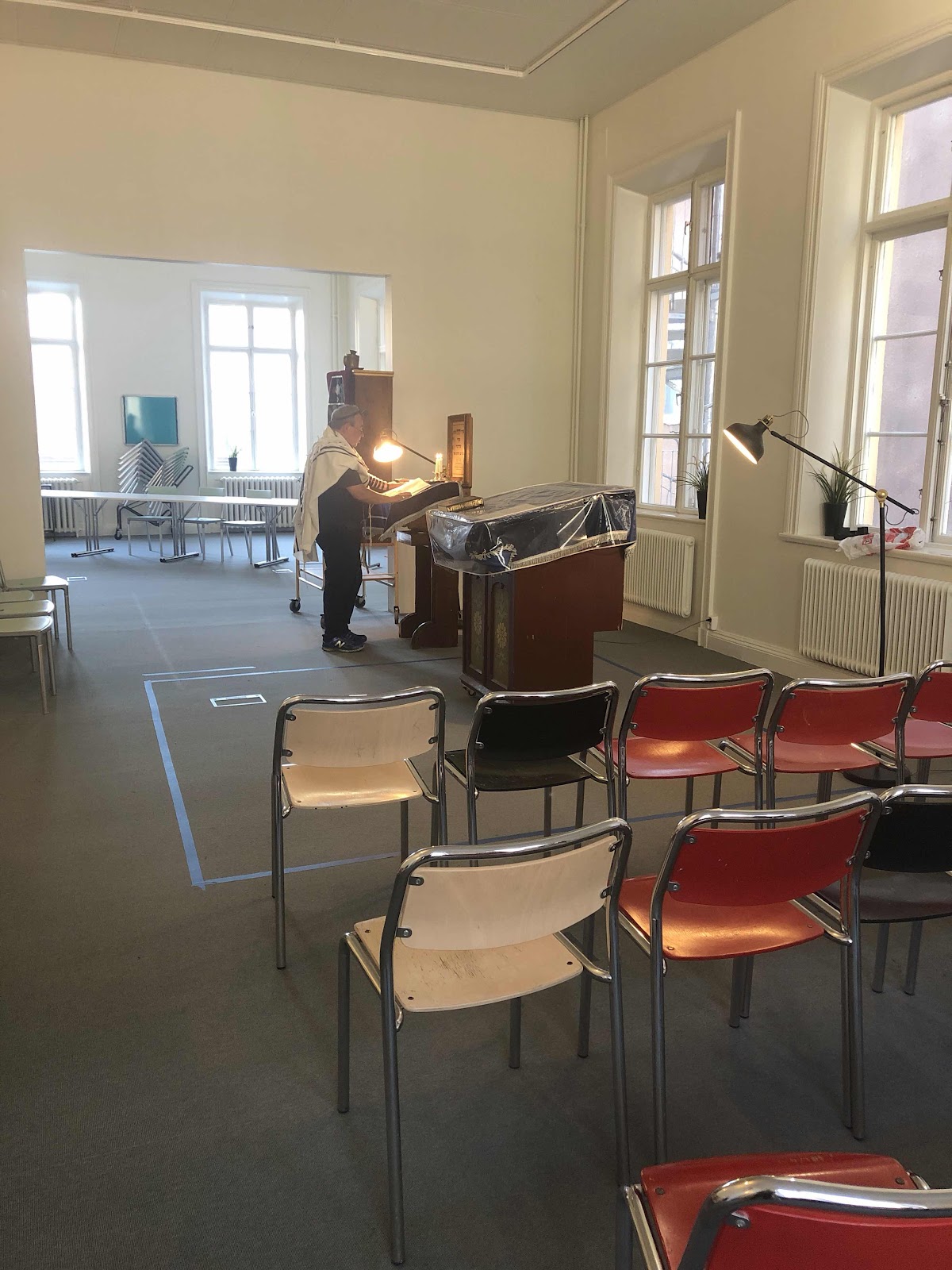
Tuesday, September 3, 2019

Scandinavia and the Baltics - Part 5

Friday morning saw us once again at shul with close to 20 attendees, where we met the Rabbi of the community, Rabbi Amram Maccabi. He has been the rabbi for a number of years of both Adat Jeschurun where we have been davening and Adat Jisrael and previously had been the Rav in Halifax, Nova Scotia. He was now completing his tenure in Stockholm and returning to Israel with his family. He told us that he would see us that evening, but would be davening on Shabbat morning at Adat Jisrael, the sister Orthodox shul on the other side of town. 

Adat Jeshurun has quite an interesting history. There was a shul founded in Hamburg, Germany in 1780. It was one of the oldest Shuls in Hamburg’s inner city. 

On November 10, 1938, on the night known as Kristallnacht, virtually all the Shuls in Germany were burnt and destroyed. This little shul survived Kristallnacht as it was located in a downtown apartment block and the Nazis did not want to cause harm to non Jews. 

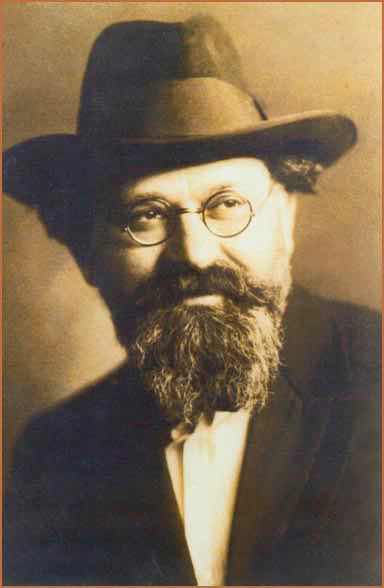
The Chief Rabbi of Hamburg at the time was Rabbi Dr. Joseph Carlebach (pictured below, an Uncle of the famous Shlomo Carlebach). He took it as an omen that the shul had survived and fearful of what was lying ahead for the Jews of Germany, wanted to secure its existence. So he contacted an old friend, Hans Lehmann, who had recently moved to Stockholm and asked him if he would be willing to take the furniture (the pews, the Aron Kodesh, the bimah etc) and the siddurim, talitot, and tefillin, and transfer it to a shul in Stockholm. Lehmann agreed and Carlebach secured an export license, identifying the interior of the shul as “old junk”. Everything was dismantled, boxed and sent to the port for the voyage to Stockholm. 

When the shipment arrived in Stockholm, it was a frightening sight. Everything was destroyed with swastikas all over the boxes. Lehmann, accepted the delivery, personally hired craftsmen to rebuild and repair everything and created a new home for the former shul in Hamburg, the new shul called Adat Jeschurun in Stockholm. 

The shul was consecrated in 1940. As Shuls were being destroyed all over Europe, in Stockholm a new shul was created. 
Unfortunately Rabbi Carlebach did not survive the war; he was murdered by the Nazis outside Riga in March 1942.

Over the years, the shul had to move numerous times and each time the furniture from Hamburg moved with the shul. Sadly, in 2013, the building housing the shul and the school was demolished and a new building was built for the school with no permanent home for the shul. So the shul till today is housed in temporary premises in the new school building but all the furniture that had survived had to be put into storage. 

In speaking to a number of members of the shul, there is a clear determination to rise again and create a permanent home for the shul at some time in the near future so that the furnishings that the Nazis failed to destroy continue to live and serve the Jews of Stockholm.  

We also discussed with some members the status of the Jewish School. It has about 350 students, but because all schools in Sweden must be public, the funding of the school could be in jeopardy if it refused to accept non Jews and also if there is too much of an emphasis on the Jewish religion. So as a result, there is only one hour of Jewish prayer a week in the school and it is optional, meaning that the student would have to opt in. Very few of the students wear kippot in the school building. 

On our way back to the apartment, we stopped by the bakery to buy breads for Shabbat, and we experimented with a couple of artisan breads, that we later discovered had fruits and nuts inside...kind of a Shabbat surprise for us when we cut into them.

Our schedule in the morning was a Segway tour of the city and so we walked the 15 minutes to the meeting point. 

Stockholm is an amazing place because of its walkability. It is relatively flat, and nearly all the tourist points of interest are within walking distance. There are bike lanes everywhere and many people are using bikes or scooters as their mode of transportation. 

We met our Segway leader, a young nursing student originally from Albania. Besides the four of us, there was another couple, who hailed from Woodstock Ontario. They were on a cruise. It seems like everyone we met during our stay in Stockholm was on a cruise. The amount of cruise traffic involving Stockholm, Helsinki, Tallin and Copenhagen must keep the tourist trade alive in the Baltic region. 

We went through a brief training session and then off we went on our Segways exploring the city. Every few blocks we would pull over to the side and our leader would share something about Swedish society and history or point out an interesting tourist site. She was very good and very professional. The ride was quite easy as well because of the designated bike/scooter/Segway lanes in the city. 


One of the very interesting places that she showed us was the source for the term Stockholm Syndrome, a psychological condition which causes hostages to develop a positive alliance with their captors during captivity. 

This term was first used by the media in 1973 when four hostages were taken during a bank robbery at the Kreditbanken (pictured below) in Stockholm. The hostages defended their captors after being released and would not agree to testify in court against them.

A very famous example of this syndrome was the Patty Hearst case with the Symbionese Liberation Army one year later in 1974. 

Another interesting stop was at a statue outside the National Theatre. If you put your hand on the bronze statue, it is warm. 

It is a statue of Margareta Krook, a famous Swedish actress.

During her life, Krook was approached with numerous proposals for statues to be built in her honor, but declined them all, stating that statues are cold and uninviting. However, after her death, the theater wanted a statue but they did not want to go against her wishes. The theater found a loophole that technically allowed for a statue and was in line with Margareta’s wishes: a heated statue. 


Especially during Stockholm’s cold winters, the statue provides warmth to everyone who passes by.

One of the other interesting spots to which we rode was the Stockholm City Hall, where the Nobel Prize Ceremony is held. 


The Segway tour was great. Unfortunately, on our way back to the office, Irving fell while trying to get off the Segway and badly bruised his leg. That caused Irving and Ruchama to cut short their touring for the day and to remain at home for the rest of the day and evening. 

Fran and I continued with the plans for the rest of the day which was to tour Stockholm’s longest Art Gallery. There are 100 subway stations in Stockholm and when they built the stations, they decided to make them interesting. Most of them have an artistic theme and using an online guide, we purchased two subway tickets and spent the next 90 minutes traveling the subway system and taking photos of this most unique subway system. Many of the stations have been left with rough hewn rock and some of them are extremely colourful. It is well worth your while if you visit Stockholm to take this self guided tour.  


We got home a few hours before Shabbat and we prepared our meals for Shabbat. But before going to shul that evening, we had one more interesting stop.

One of the most beautiful sights in Stockholm is the Great Synagogue, which is a conservative Synagogue. We had noticed that the shul would be open for Friday night services at 6:30 PM while Adat Jeschurun would have Kabbalat Shabbat at 7:30 PM. So we decided to go first and have a look at the Great Synagogue and then drop off our camera and passports at home before candle lighting and before proceeding to shul.


It was well worth the visit. Truly one of the most beautiful sanctuaries that we have ever seen. 

I went to Adat Jeschurun myself and was honoured with leading Kabbalat Shabbat. There were about 15 men and one woman there. We were told that for Shabbat morning, there would be a much larger crowd because of a kiddush honouring one of the members who was turning 90 years old. 

I returned home to the apartment and we had a very wonderful Shabbat meal, followed by a wonderful long Shabbat sleep.

More to come

Fran and David


Monday, September 2, 2019

Scandinavia and the Baltics - Post 4

On Thursday morning, we once again headed to shul and this time, there was a minyan, about 17 of us in total. Some of the men had heard that I had this thing about wanting to lain in every country that I visited, so they asked me to lain. 


We came back to the apartment, ate breakfast and headed over to the Vasa Museum.

The Vasa was a huge war ship built between 1626 and 1628 in Sweden on the orders of King Gustavus Adolphus as part of his military expansion in the war he initiated with Poland and Lithuania. This was meant to be his flagship and was meant to be a symbol of his power and influence over all of Europe. But the shipbuilders had never before built such a ship and while it was huge, with many decks filled with canon firepower, the ship was unbalanced and unstable. In its maiden voyage, just about 1000 metres out into the sea, a mild wind tilted the ship and it sank. Many died in this terrible accident. A message was instantly sent to the king who was fighting a war in Poland but he did not receive the message for two weeks. 


The Vasa lay on the floor of the harbour for close to three and a half centuries until it was raised in the 1960’s. It was stored in a warehouse until a suitable spot could be found to display this well preserved relic.

In 1990 the Vasa Museum was opened where the full size original Vasa stands. Since the opening of the Museum, there have been close to 40,000,000 visitors. We opted for the English tour, given a number of times daily, and it was well worth it to hear the explanation of the boat and the events surrounding its construction, its magnificence and its ultimate failure. There is also a movie that shows exactly how they raised the wreck from the ocean floor.


When we finished touring the Vasa, we walked past the kosher street food truck (Vegan Schmeegan), and caught a tram to the docks, where we caught a ferry to one of the many islands surrounding Stockholm, Vaxholm. 

The weather up to this point had been awesome but now it turned cloudy. So the ferry ride to Vaxholm was a bit of a downer. The little island Vaxholm, and the town of the same name are very quaint with brightly coloured houses, many boutiques and coffee shops, and if the weather was better, it would have been a better afternoon. So we cut our time in Vaxholm in half and took the bus back to Stockholm. 


We went back to the old city and returned to one of the stores we had seen the first day - a pop up store by a Swedish artist, where we saw some very interesting items. 


At the same time, we were told by a policeman who we met in the Old City that there was a new Jewish Museum in the Old City and that it was located near the massive German church. 

We could not find it so we went to the church and asked them where the Jewish Museum was located. Thank God they knew. The place had a very interesting history. 


It was located at Själagårdsgatan 19, in a building that was originally a shul in 1795. When the congregation vacated the premises in the 1870s, it was taken over by the Seaman’s Church, who retained the bimah and Aron Kodesh to be used in their services. 


When they vacated, it became a Police Station and the Police Commissioner, who happened to be Jewish, recognized that it was an Aron Kodesh. He arranged for it to be transferred to storage at the Nordic Museum where it remained until it was returned to this small and interesting new museum that just opened its doors this past June. The Museum shares much of the history of Swedish Jewry with many historical letters and features about its founders and significant leaders. 

And had the policeman not told us, we would have never visited this absolute little gem. 

We returned once again to Herman’s for a vegan dinner and once again it was delicious. This time we also shared a vegan dessert pie which was absolutely outstanding. 


Tomorrow is Erev Shabbat in Stockholm....more to come

All the best,

Fran and David


Sunday, September 1, 2019

Scandinavia and the Baltics - Post 3

On Wednesday morning, we were up bright and early and Irving and I went to shul. There was a scheduled minyan for 7:30 AM.

When we arrived at the Bajit centre, we were buzzed in and could not find the shul. After a few minutes, another minyan goer arrived and he led us up to the third floor in an older part of the complex. Apparently, there was an original school (name of the school is Hillel) in the older building where we davened, and while it is still being used as a school, the school population grew (currently around 350 kids) and they built an adjacent modern building attached through interior ramps. 

When we got into the shul, it was really an empty meeting room with an Aron Hakodesh. 


There were 5 men in total including us and then over the next 20 minutes, two more arrived. One of the men explained to us that the room was used for weekday tefillah, and on Shabbat they daven in a larger room on the main floor. There is another shul in town, Adat Yisrael, and they also have a daily minyan. During the summer months, the two minyanim combine because of people being away for the summer school break. The break is over and therefore there are now two minyanim. Adat Yisrael has an easier time with a minyan and Adat Jeschurun struggles. 

We never did get a minyan. The men there invited us to the free breakfast that is served for the minyan goers, but we wanted to get on with our day, so we said our goodbyes and told them we would see them again on Thursday, when they said there was a better chance at a minyan appearing. 

On our way out, we met a man who struck up a conversation with us. He told us that he was on the board of the shul and he explained a number of things to us. The shul had originally been in the older community centre/school which was right next door. The community decided to build the new centre building and sell the other building, which, on a main shopping street in a very expensive area of Stockholm, likely provided much needed funds for the new building. 

The shul itself has a fascinating history, which I will share in a future post.

We walked to a branch of the Fabrique Bakery, just down the street from the shul.


The Rabbi endorses this bakery. They have an amazing array of artisan breads and sweet rolls. We bought enough for the day and headed back to the apartment. 

Our first stop of the day was a free walking tour of Gamla Stan, the old city. We took a cab to the meeting point at the Gamla Stan Subway stop. Taxis in Stockholm are plentiful but are very expensive. 

At the meeting site, there were about twenty other tourists who were taking the Free Tour. 


The guide, Alex, was very knowledgeable about the city and presented the material with a bit of humour. On the two hour walk, he led us thru the Old Town and pointed out all the important buildings in the area, all the while educating us about the history of Sweden and specifically Stockholm. It was a beautiful day, perfect for a walk in the city. 


Our impression of the Swedish people has always been a non violent, pacifist, and compromising people. But the walk certainly changed that story, as we heard about the many wars and the bloody history of the monarchy in years gone by.


Gamla Stan is visually beautiful as the old city and all its buildings have been preserved in their original state. The cobblestone streets and narrow alleyways with low rise buildings takes you back hundreds of years to Stockholm’s roots. It is an island, one of the many that make up the municipality and does not stretch for more than ten blocks in any direction. 

We ended the walk at the Royal Palace, one of the largest in the world with 600 rooms. 


Today, no one lives there. The King and Queen decided a while ago to relocate as they wanted their young children to grow up with accessibility to the outdoors, something that would be impossible in Stockholm. 

Every day at precisely 12:14 PM throngs of spectators gather near the palace to witness the changing of the guard. The procession of army, mounted police, and marching band begins at noon from a location north of the palace and at exactly 12:14 they arrive at the palace for the changing off guard. The band generally plays the Swedish National Anthem, but on the king’s birthday they play a melody by ABBA, as the king is a big fan.

We ate lunch at the harbour next to the Royal Palace. Stockholm seems to be a place where residents and visitors love the outdoors. What is not to love? A clean city surrounded by water from all sides is welcoming to those who want to experience the outdoors. Wherever we went over our 5 days in Stockholm, the outdoor cafes were filled with people. I guess this works well in the summer when the weather is good. I wonder what it looks like in the cold of winter?

We walked thru the narrow shopping streets of Gamla Stan on our way to Ericcson Globe. 


Ericcson was the company that revolutionized the mobile phone. We hopped onto the Subway toward the southern island of Stockholm, and exited at the stop for the Ericcson Globe. Just minutes from the subway stop, we entered an area with the Ericcson Galeria, and three state of the art sports arenas which host hockey games, live theatre and musical performances. The most imposing of these is the Globe, the largest spherical building in the world. The building houses 14000 people for a hockey game. 


On the outside of the globe, there is a gondola ride that transports visitors to the top of the globe where you have an unobstructed view of the entire area. The view was amazing.

From here we hopped back on the subway and went to visit Fotografiska, a very popular photo gallery right next to where the daily cruise ships dock for their Baltic cruises. They were featuring the photography of the famous documentary photographer George Santayana, who covered disasters all over the world and who famously coined the phrase “those who cannot remember the past are condemned to repeat it”. His graphic depictions of 9-11, famines in Africa, suffering of immigrants the world over, etc. were very moving. One of his most famous was this shot of Nelson Mandela.


The second part of the gallery featured a variety of portrait photos and creative whimsical photos by various artists. 

In the back of the main gallery was an area where someone was giving a tour in Swedish. The exhibit was called Fading Stories and the person doing the tour was the photographer herself, Sanna Sjosward. Sanna was born in Iran but was adopted by a Swedish family and raised in Sweden. 

The exhibit, representing 3 years work by Sanna in interviewing and photographing 23 Holocaust survivors, was a joint project of Sanna, the Raoul Wallenberg Foundation and Fotografiska, and will be made available to schools throughout Sweden as a means to emphasizing that we must never forget what happened. As Sanna wrote, “The survivors won’t live forever, but their stories need to”. 

When we heard what the topic was about, we went over to Sanna and introduced ourselves and shared Fran’s roots with her. She was so pleased to spend some time with us and asked that I photograph Fran together with her and with one of her subjects. 


She said “By remembering the stories of the Holocaust we can prevent one of humanity’s darkest moments from repeating itself”. She told us that the exhibit was opened the night before with over 500 guests in honour of the Swedish national day for equal rights, and civil courage, recognizing the amazing contribution of Raoul Wallenberg of blessed memory. 

As we were exiting the gallery, she presented Fran with a memento: an photo album of the Gallery’s last 8 years of featured exhibits. 

We ended a very busy day with a wonderful vegetarian dinner at Herman’s, a restaurant endorsed by the local Orthodox Rabbi. The food was natural, fresh and delicious. Highly recommended.


On Thursday we continue our tour of Stockholm....

All the best, 

Fran and David